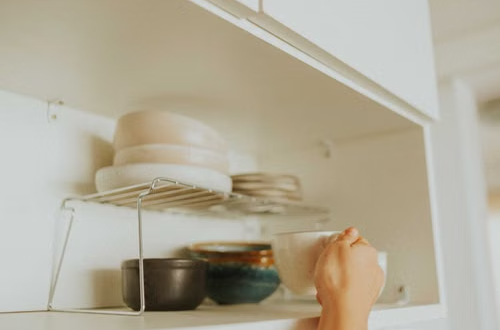
Tiny Entryway Storage Tamed
12 Entryway Storage Ideas for Small Apartments That Actually Make a Difference
A small entryway doesn’t need to be perfectly styled. It needs to handle the things you bring home every day.
Shoes get kicked off by the door. Coats end up on the nearest chair. Mail lands on the kitchen counter. Reusable bags somehow multiply. And before long, the area around the door becomes the place where everything goes when nobody knows where else to put it.
The solution isn’t necessarily more furniture. In a small apartment, every inch has to earn its place.
The most useful entryway storage ideas are the ones that make everyday habits easier: a place for your keys that you can reach without thinking, somewhere for the shoes you actually wear, and a way to stop incoming clutter before it spreads through the rest of your home.
Here are 12 simple ways to make that happen.
1. Give Your Keys One Permanent Home
Keys are small, but they’re responsible for a surprising amount of daily frustration.
Choose one spot directly inside the door—a wall hook, small peg, or compact organizer—and make it the only place your everyday keys go.
The important part isn’t what you buy. It’s choosing a location that’s visible, convenient, and easy to use when you walk through the door.
2. Keep Everyday Shoes in a Basket
If there’s no room for a shoe cabinet, don’t try to store every pair of shoes in the entryway.
Instead, use a basket or open bin for the few pairs you wear most often. Everything else can live in a closet or bedroom. These foldable storage bins work well for exactly this.
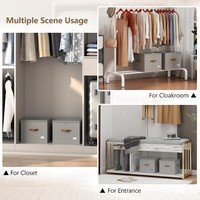
This keeps shoes contained without requiring a bulky piece of furniture—and makes putting them away almost effortless.
3. Make Use of the Wall Above the Floor
When floor space is limited, look up.
A few sturdy wall hooks can hold coats, handbags, hats, umbrellas, and the things you tend to drop on a chair instead.
Just be careful not to fill every inch of wall space. A small number of useful hooks is better than creating another crowded storage area.
4. Choose a Bench That Earns Its Space
A bench can be useful in a small entryway, but only if you actually need somewhere to sit.
If you have the room, look for a narrow bench with storage underneath. It can give you a place to put on shoes while keeping a few everyday items tucked away. A cushioned 3-tier shoe rack bench is a good fit for exactly this kind of spot.
If your entryway is too narrow for comfortable seating, skip the bench. You don’t need one just because entryway makeovers often include one.
5. Give Mail a Place to Go Before It Reaches the Counter
Mail becomes clutter surprisingly quickly because it doesn’t have an obvious destination.
Create a simple landing spot near the door—a wall file, small tray, or basket. Then make one rule: incoming mail goes there first, not onto the kitchen counter.
You don’t need an elaborate filing system. You just need to prevent unopened mail from migrating around the apartment.
6. Don’t Waste the Back of the Door
The back of a closet, pantry, or nearby interior door can provide valuable storage without taking up additional floor space.
An over-the-door organizer can hold lightweight items such as scarves, hats, cleaning supplies, pet-walking accessories, or other small things that need to stay close to the entrance.
Use this space selectively. The goal is to reclaim unused space—not create a hidden junk drawer that happens to hang vertically.
7. Give Reusable Shopping Bags a Home
Reusable bags have a habit of ending up in several places at once.
Keep them together near the door, preferably somewhere you can grab them on the way out. A basket, hook, or small bag holder can work.
If you have more bags than you realistically use, this is also a good place to edit the collection. Storage shouldn’t be an excuse to keep twenty bags you never reach for.
8. Put Small Things on a Tray
A small tray can make a surprisingly big difference.
Use it for the things you regularly empty from your pockets or grab before leaving: sunglasses, wallets, keys, earbuds, or other small essentials.
The tray creates a visual boundary. Instead of several little objects spreading across a console or counter, they have one defined place to land.
9. Move Seasonal Things Out of the Entryway
Your entryway doesn’t need to store everything you might possibly need throughout the year.
When the weather changes, rotate what lives near the door. Store bulky winter accessories away during warmer months, for example, and bring them back when you need them.
This is especially helpful in a small apartment because storage space that isn’t being used for the current season is space you’re paying for but not benefiting from.
10. Go Narrow and Tall When Floor Space Is Tight
If you need actual furniture storage, look for pieces that use vertical space rather than spreading across the floor.
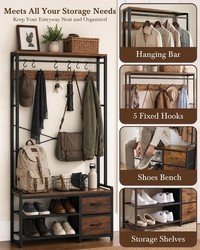
A narrow shelving unit, tall cabinet, or slim storage tower can sometimes hold considerably more than a wide console while leaving more walking room. This 5-in-1 entryway storage system with a hall tree, hooks, and shoe bench is a great example of making vertical space work hard.
Before buying anything, measure the available width, depth, and height. A piece that technically fits can still make an entryway feel cramped if it leaves too little room to move comfortably.
11. Create a “Leaving the House” Zone
Think about what you actually reach for when you leave home.
Maybe it’s your keys, handbag, sunglasses, headphones, dog leash, or reusable bags.
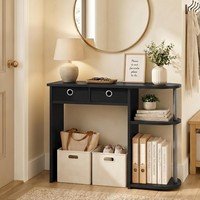
Instead of storing those things wherever they happen to fit, group the essentials around the door and give each one a specific home. A compact console table with drawers and shelving works well here, giving each essential its own spot.
This works because you’re organizing around your routine rather than an idealized version of your home.
12. Make Putting Things Away Easier Than Leaving Them Out
This may be the most important idea on the list.
If a storage system requires opening a cupboard, moving three things, and carefully placing an item inside a particular container, you’re probably going to stop using it.
The best entryway storage is often the least complicated: an easy-to-reach hook, an open basket, a tray, or a shelf at the right height.
Your storage doesn’t need to look impressive. It needs to be easy enough that you’ll still use it on a busy Tuesday evening.
A Small Entryway Doesn’t Need More Stuff
You don’t need to turn a tiny entrance into a miniature mudroom. Curate your belongings in style.
Start by noticing what actually collects there. If it’s shoes, solve the shoe problem. If it’s bags and coats, add accessible hooks. If it’s mail, give paper a landing spot. If it’s a collection of random things that need to leave the apartment, create a small “take with me” zone.
The goal isn’t to hide everything. It’s to make the things you use every day easier to put away.
A few well-placed hooks, one basket, a small tray, and a storage spot that fits your routine can be enough to make a small entryway feel calmer—and, just as importantly, make it easier to keep that way.

You May Also Like
10 Under-Bed Storage Ideas for Small Bedrooms
10 Kids’ Room Storage Ideas for Small Bedrooms