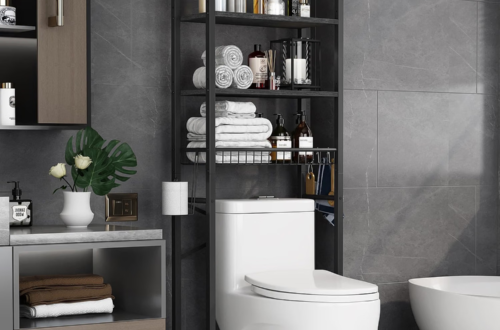
20 Clever Ways to Organize a Small Apartment So It Feels Twice as Big
20 Clever Ways to Organize a Small Apartment So It Feels Twice as Big
Smart, stylish ways to create more room without moving, renovating or filling your apartment with bulky furniture.
There is a particular frustration that comes with living in a small apartment: you tidy one area, and somehow another looks cluttered five minutes later.
The shoes are back by the door. The kitchen counter is crowded again. The wardrobe is full, yet you still struggle to find what you’re looking for. And that awkward gap beside the fridge? It has been sitting there unused for months.
The answer isn’t always another cupboard or a collection of matching storage boxes.
Often, the biggest difference comes from making better use of the space you already have, choosing furniture that earns its footprint and giving everyday belongings somewhere sensible to go.
The good news? You don’t need a large budget to make a small apartment feel more organized and thoughtfully designed.
These small apartment storage ideas focus on the places where clutter tends to accumulate, the overlooked spaces that could be doing more, and the practical storage solutions that make everyday life easier. Some cost very little to implement; others are worth investing in if they solve a problem you deal with every day.
Whether you’re organizing a studio, a compact rental or a small home that simply needs to work harder, start with the ideas that suit your space.
1. Reclaim the Space Beneath Your Bed
Best for: Small bedrooms, limited wardrobes and seasonal storage.
Your bed may be taking up a substantial part of your bedroom, but the space beneath it can do more than collect dust.
It’s an ideal place to store spare bedding, out-of-season clothing, extra pillows or shoes you don’t wear regularly. The trick is to make this hidden space accessible rather than turning it into a place where belongings disappear.
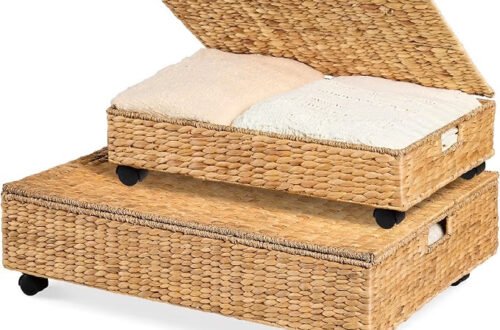
Low-profile storage containers work well when you need an affordable solution. Look for wheels if you’ll be accessing the contents frequently, or choose covered containers to keep dust away from stored items.
If you’re buying a new bed, a frame with integrated drawers may provide even more useful storage without requiring additional floor space.
Shop your space: Measure the clearance beneath your bed before choosing an organizer. Check the length, width and height carefully, including room to pull it out.
2. Use Your Walls to Free Up the Floor
Best for: Studio apartments, narrow rooms and compact living areas.
When every square foot matters, wide furniture can quickly become an obstacle.
One alternative is to think vertically. A tall, narrow shelving unit can store books, baskets and everyday belongings while using less floor space than a broad bookcase. Wall-mounted shelves can serve a similar purpose above a desk, beside a sofa or in an otherwise empty corner.
The key is to choose storage that fits the room rather than simply filling every available wall.
For a more polished look, combine closed storage baskets with a few books or decorative objects. You’ll still have useful storage, but the result won’t feel like a wall of miscellaneous belongings.
In rental apartments, freestanding shelves may be preferable if drilling isn’t permitted. If you install wall-mounted units, use appropriate fixings and observe the weight limits.
3. Turn the Back of a Door into Hidden Storage
Best for: Bathrooms, bedrooms, pantries and utility cupboards.
Some of the most useful storage spaces in a small apartment are hiding in plain sight.
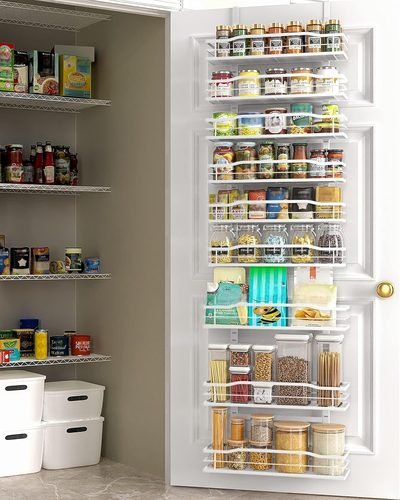
The back of a suitable door can hold shoes, accessories, cleaning supplies, toiletries or other lightweight items that would otherwise occupy valuable cupboard space.
A hanging shoe organizer can work beyond the bedroom, too. Depending on its design, it may hold scarves, small accessories or household supplies. In a pantry, a suitable over-the-door rack can make frequently used items easier to reach.
Before buying anything, check the door’s thickness, clearance and ability to close with the organizer fitted. Avoid overloading the door or placing heavy items on products not designed to support them.
4. Give the Everyday Clutter a Proper Landing Place
Best for: Entryways and apartments where clutter travels from room to room.
Keys, handbags, coats, shopping bags and shoes all have one thing in common: they tend to end up wherever you happen to put them down.
Without a designated place for these everyday items, even a beautifully decorated apartment can feel untidy.
Create a small landing zone near the entrance. A row of wall hooks can hold coats and bags, a narrow shoe cabinet can contain footwear, and a small tray can keep keys and sunglasses together.
If there’s room, a compact bench makes putting on shoes easier and can provide another storage opportunity.
You don’t need a dedicated mudroom. Even a narrow strip of wall can become a practical, attractive entryway organization station.
5. Make Storage Baskets Part of the Design
Best for: Open shelving, living rooms and frequently used household items.
Open storage can be useful, but it doesn’t always look calm. When every small item is visible, shelves can become visually busy even when everything is technically organized.
Baskets offer a simple solution. They group related belongings together, conceal the less attractive bits and add texture to a room.
Use them for spare cables, remote controls, toiletries, accessories, toys or cleaning cloths. In a living room, natural woven baskets can complement warm wood and neutral fabrics. In a bathroom, washable fabric bins may be more practical.
For The Budget Nester look, consider natural textures, warm neutrals and simple shapes that complement your existing furniture.
Just measure the shelf before buying. A beautiful basket that doesn’t fit is still the wrong basket.
6. Buy Furniture That Solves Two Problems at Once
Best for: Small living rooms, studio apartments and multipurpose spaces.
In a small home, furniture has to earn its place.
A storage ottoman can act as a footrest, provide extra seating and hold spare blankets. A coffee table with drawers can hide remotes and chargers. A storage bench can provide a place to sit while keeping shoes or accessories out of sight.
These pieces are particularly useful when adding a separate storage cabinet would make the room feel crowded.
However, multifunctional furniture isn’t automatically a good investment. Consider whether you’ll use the storage regularly, whether the piece fits the room and whether you can access its contents without moving half the furniture around.
Choose something that works for your daily routine, not just something that looks clever in a product photograph.
7. Find a Use for That Awkward Gap Beside the Fridge
Best for: Small kitchens and apartments with limited pantry space.
Small kitchens often have narrow gaps that are too useful to ignore but too awkward for conventional furniture.
If you have enough clearance beside the refrigerator, a slim rolling cart may provide space for pantry items, cooking supplies or other lightweight essentials. Similar carts can work beside a washing machine or in a compact bathroom.
The advantage is access: you can roll the cart out when you need something and tuck it away again.
Measure the gap at its narrowest point and account for handles, skirting boards and any obstructions. Check that the cart can move freely and that its contents won’t interfere with nearby appliances.
A narrow cart won’t replace a full pantry, but it can make an otherwise wasted space useful.
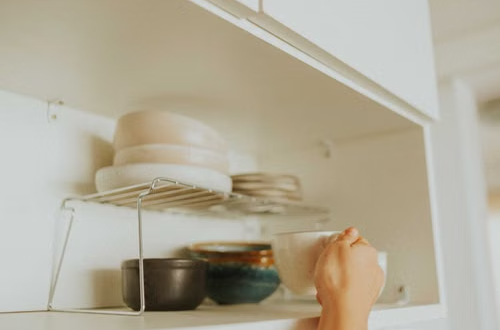
8. Double Your Cupboard Capacity with Shelf Risers
Best for: Kitchens, bathrooms and linen cupboards.
Before deciding you need another cupboard, look at the shelves you already have.
Are your mugs, plates or toiletries occupying only the bottom half of each shelf? Are small pantry items disappearing behind taller packages?
Shelf risers create a second level within the existing space, making it easier to separate items and see what you own.
In the kitchen, they can help organize mugs, plates and tins. In the bathroom, they can create additional levels for skincare and toiletries. Under a sink, a suitable shelf organizer may help separate cleaning products from smaller supplies.
Measure the cupboard carefully and leave enough clearance to remove items comfortably.
9. Make Your Wardrobe Work with the Clothes You Actually Wear
Best for: Small bedrooms and wardrobes that always feel full.
An overfilled wardrobe isn’t necessarily a sign that you need a bigger one.
Sometimes, the problem is that clothing you rarely wear is occupying the same prime space as the pieces you reach for every week.
Start by removing items you no longer use. Then group the remaining clothes in a way that suits your routine. Slim hangers may help create more hanging space, while hanging shelves and drawer dividers can make use of otherwise awkward areas.
Seasonal clothing can be stored elsewhere if your wardrobe can’t comfortably accommodate everything.
You don’t need a perfectly color-coordinated closet. You need to be able to see what you own, find it easily and put it away without a struggle.
10. Use the Space Above Kitchen Cabinets Carefully
Best for: Kitchens with a gap between the cabinets and ceiling.
That empty strip above your kitchen cabinets may provide storage for occasional-use items that don’t need to be within easy reach.
Suitable lightweight serving pieces, seasonal decorations or neatly contained belongings may work well there. But the location matters: dust and cooking grease can accumulate, and anything stored overhead needs to be safe to access.
Use sturdy containers that are easy to identify, and avoid placing heavy or fragile items where retrieving them could be difficult.
If the space is awkward, exposed or difficult to clean, leaving it empty may be the better option. Not every gap needs to be filled.
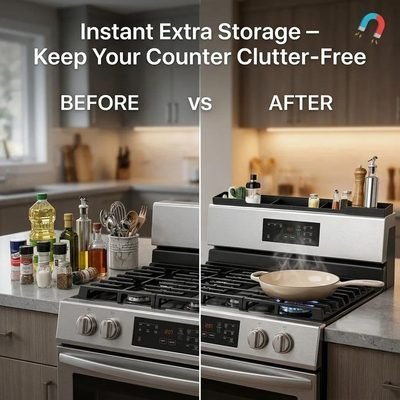
11. Clear the Kitchen Counter Without Hiding Everything
Best for: Small kitchens with limited food preparation space.
A clear kitchen counter gives you room to prepare meals, unpack shopping and work comfortably. But that doesn’t mean every appliance or utensil needs to disappear into a cupboard.
Instead, decide which items deserve to stay within easy reach.
A tray can group coffee-making essentials together. A utensil holder can keep everyday cooking tools accessible. Cabinet organizers can help store mugs, food containers and cookware more efficiently.
Keep the items you use daily close at hand, and move occasional-use appliances elsewhere if practical.
The goal isn’t a kitchen that looks untouched. It’s a kitchen that works well without making every meal feel like a clearing-up exercise.
12. Use Hooks Instead of Adding Another Piece of Furniture
Best for: Small entryways, bathrooms, kitchens and utility areas.
A shelf or cabinet isn’t always the answer. Sometimes, a few well-placed hooks will solve the problem with far less effort.
Hooks can hold coats, handbags, towels, reusable shopping bags and frequently used accessories. They can also keep items off chairs, counters and floors.
Choose a style that complements your room, whether that’s matte black, brushed brass or natural wood. For rental homes, suitable removable hooks may be an option for lightweight items, provided the surface and product instructions allow it.
Pay attention to placement. Hooks should be easy to reach without obstructing doors, walkways or other storage.
13. Make Drawers Easier to Use with Simple Dividers
Best for: Bedroom drawers, kitchen utensils and bathroom essentials.
Drawers often appear to have plenty of space until everything gets mixed together.
Dividers create separate zones for socks, underwear, stationery, utensils, cables and other small items. Instead of rummaging through a crowded drawer, you can see where things belong.
Adjustable dividers are useful when drawer dimensions are unusual. Modular trays can work well for small items that need to remain separate.
Start by emptying the drawer and sorting its contents before choosing an organizer. Otherwise, you may buy a divider that doesn’t suit what you’re storing.
14. Give Your Pantry a ‘Use First’ Shelf
Best for: Small kitchens, limited food storage and reducing waste.
A pantry can look organized and still be frustrating to use if you can’t see what needs to be eaten first.
Create a small, clearly visible area for opened packages, ingredients approaching their best-before dates and items left over from previous meals.
A handled basket or designated shelf can make these foods easier to spot when planning meals. Grouping similar ingredients together also helps you see what you already have before buying more.
You don’t need to decant everything into matching containers. Keep original labels and dates visible wherever possible, and choose clear storage only when it makes identification easier.
15. Store Seasonal Items Outside Your Everyday Storage Zone
Best for: Small closets, limited linen cupboards and changing seasons.
Not everything you own needs to be immediately accessible all year.
Heavy winter bedding, seasonal clothing and holiday decorations can occupy valuable space even when you won’t need them for months.
Move these belongings to a suitable less-accessible location, such as under the bed or on a high wardrobe shelf. Use clean, dry containers, label them clearly and keep delicate textiles in storage appropriate to their care requirements.
The point isn’t to hide belongings and forget about them. It’s to reserve your most convenient storage for the things you use most often.
16. Use the Inside of Cupboards More Efficiently
Best for: Bathrooms, kitchens and utility cupboards.
Sometimes the problem isn’t a lack of cupboards but the way they’re arranged.
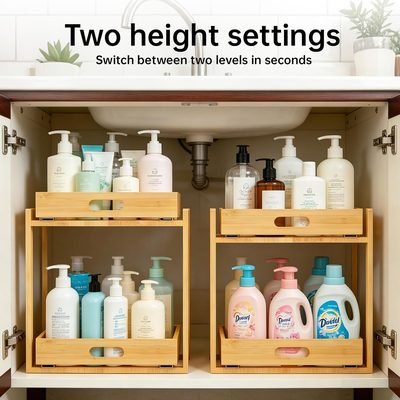
The space beneath a sink, for example, can be difficult to use because of plumbing. A suitable tiered organizer may help separate cleaning products, spare toiletries or household supplies. Inside a kitchen cabinet, a shelf insert or under-shelf basket can create another level for smaller items.
Choose products that work around existing pipes, hinges and shelves rather than forcing something into an unsuitable space.
Measure first, particularly when working around plumbing or cupboard doors. The most effective organizer is the one that fits the cupboard you actually have.
17. Create a Small Charging Station for Cables and Devices
Best for: Living rooms, bedrooms and work-from-home spaces.
Chargers and cables have a habit of spreading across whichever surface happens to be convenient.
A designated charging area can keep them together and make it easier to find the right cable when you need it.
Depending on your setup, a small desktop organizer, cable-management box or charging station may be sufficient. In a home office, cable clips can help keep cords organized around the desk. In a shared living area, a small tray or drawer can provide a designated place for devices and accessories.
Keep charging equipment well ventilated, follow manufacturer instructions and avoid enclosing devices or power supplies in containers that can trap heat.
18. Make a Donation Box Part of Your Routine
Best for: Apartments where cupboards gradually become overcrowded.
Organizing your home isn’t just about finding better places to put things. It’s also about deciding what no longer needs to take up space.
Keep a reusable bag or small box somewhere convenient. When you come across clothing, accessories or household items you no longer use, place them there rather than returning them to an already crowded cupboard.
When the bag is full, arrange to donate suitable items or dispose of anything that cannot be reused appropriately.
This small habit helps prevent clutter from building up again after you’ve organized a room.
You don’t need to declutter the entire apartment in one weekend. Consistent small decisions can make the process much easier.
19. Make Small Shelves Look Intentional, Not Overfilled
Best for: Living rooms, bedrooms and open shelving.
Shelves can provide valuable storage, but filling every available inch with objects can make a small room feel crowded.
Instead, give the shelves a simple structure. Group smaller belongings in baskets, keep frequently used items within easy reach and leave some open space between groups.
You can combine practical storage with a few decorative details, such as books, a small plant or a favorite object. The balance will depend on how much storage you actually need.
If a shelf is carrying heavy items, make sure it is installed securely and is suitable for the load.
20. Measure First — Then Buy the Organizer
Best for: Anyone tempted by a clever storage product online.
It’s easy to see a beautiful organizer and imagine how much better your apartment could look with it.
But buying storage before identifying the problem can lead to more clutter, wasted money and products that don’t fit.
Before you shop, work through three simple questions:
- What exactly needs to be stored?
- Where will the item live, and how much space is available?
- How often will I need to access it?
Measure the height, width and depth of the available space. Allow room for doors to open, drawers to slide out and containers to be removed comfortably.
Then choose a product that solves the specific problem, suits your budget and works with the way you live.
Sometimes the best solution is a storage product. Sometimes it’s rearranging a shelf or letting go of things you no longer need.
Either way, you should know what you’re solving before spending money.
The Small Apartment Storage Products I’d Start With
If you want to improve your apartment without buying a dozen organizing products at once, begin with the areas that cause the most daily frustration.
These are useful starting points:
- For the bedroom: Under-bed storage containers, slim hangers and drawer dividers.
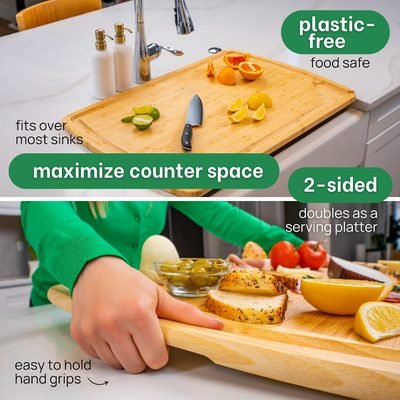
- For the kitchen: Shelf risers, pantry baskets and a slim rolling cart. Also try the over-the-door rack, the extra large cutting board and the over-the-stove shelf.
- For the entryway: Wall hooks, a narrow shoe cabinet and a small catch-all tray.
- For the bathroom: Under-sink organizers, compact shelves and baskets for toiletries. Start with the bamboo slide-out under-sink organizer.
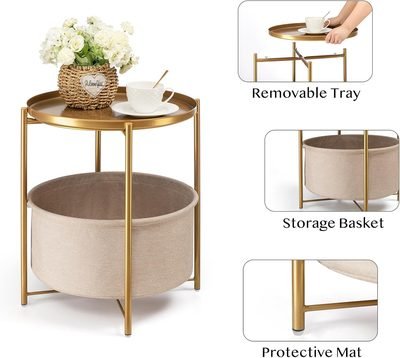
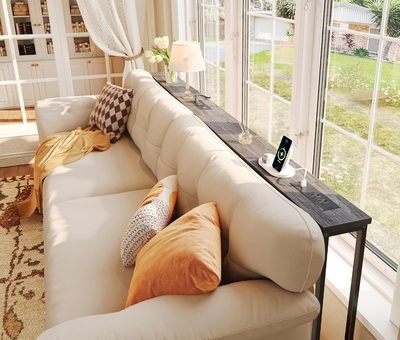
- For the living room: A storage ottoman, woven baskets or a coffee table with built-in storage. The round gold side table with basket and the slim sofa console are good places to begin.
Look for products that fit your measurements, are easy to use and complement the furniture you already own. Natural textures, warm neutrals and clean lines can help storage feel like part of the room rather than an afterthought.
You don’t need to buy everything on this list. A few well-chosen solutions are often more useful than a cupboard full of organizers.
A Small Apartment Doesn’t Need to Feel Like a Storage Unit
The most successful small apartment storage ideas aren’t necessarily the most elaborate or expensive.
They’re the ones that solve the problems you encounter every day: a crowded entryway, a wardrobe that’s difficult to use, a kitchen counter with no room to work or a cupboard where nothing seems easy to find.
Start with one area. Remove what you no longer need, make better use of the space you already have and invest in storage only when it genuinely improves how the room functions.
You may discover that a few thoughtful changes make more difference than a major shopping trip.
Because a well-organized home isn’t about fitting as many belongings as possible into the smallest space. It’s about creating a home that feels comfortable, looks considered and works beautifully for the way you live.
And you don’t need a bigger apartment to do that.
Disclosure: This post contains affiliate links. If you buy through them, I may earn a small commission at no extra cost to you. As an Amazon Associate I earn from qualifying purchases.
You May Also Like
10 Kids’ Room Storage Ideas for Small Bedrooms
12 Small Kitchen Storage Ideas on a Budget